
Put a warm, buttery slice of garlic bread beside a bowl of pasta or soup, and dinner feels more complete. This easy loaf-based side gives you crisp edges and a soft center without turning a weeknight meal into a project. Prep is quick, and you can adjust the garlic level to suit everyone at the table. Open-face baking means baking the bread cut side up without wrapping it, so the edges can toast. That simple method makes it easy to get the texture you want, whether you are serving a few people or filling a basket for the whole table.
The recipe starts with a ready-to-bake French bread loaf and a spread you can mix by hand. You do not need a special pan, a long ingredient list, or homemade yeast dough. A little Parmesan or parsley can make the loaf feel dressed up, while the basic version stays simple enough for an ordinary Tuesday. The short prep time leaves you free to finish the rest of the meal. Start by gathering the loaf and the ingredients for the garlic butter.
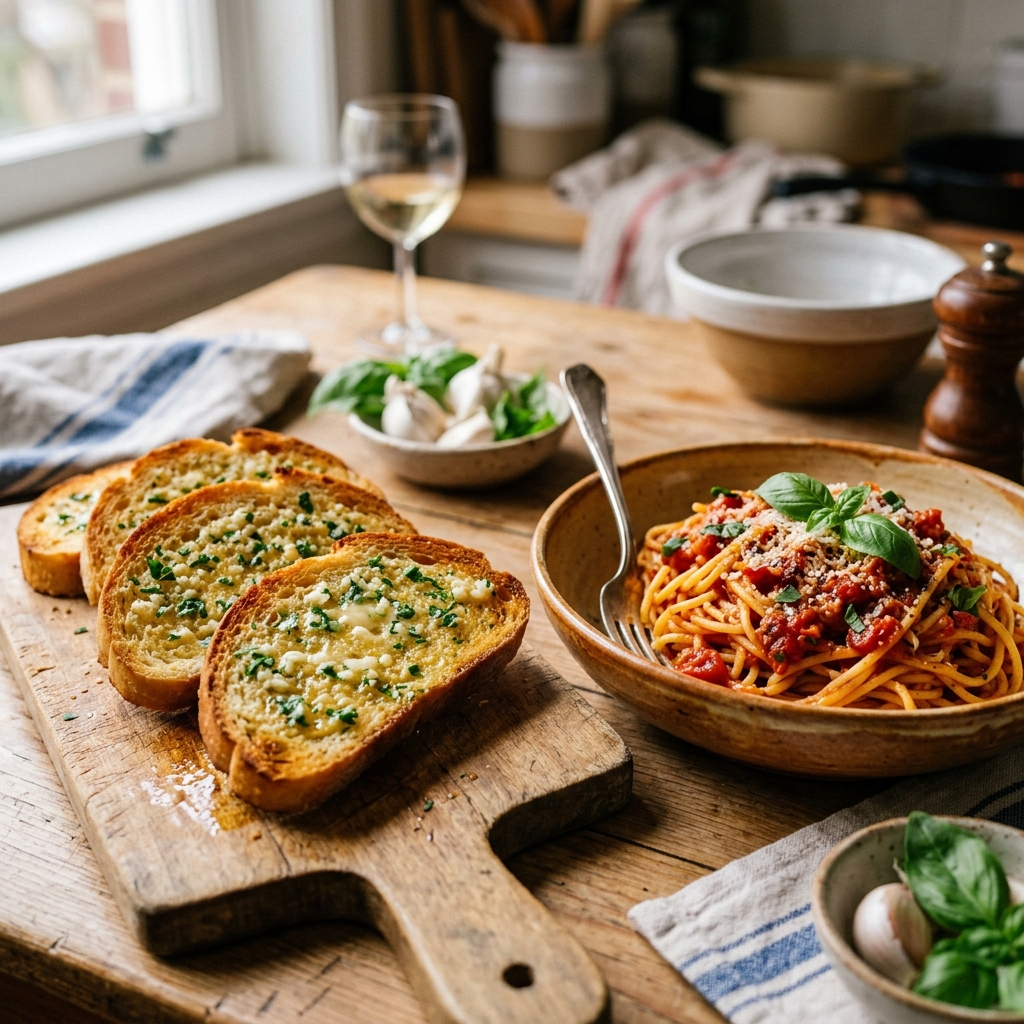
What You Need for Homemade Garlic Bread
Start with this short shopping list: one French bread loaf and a handful of ingredients for garlic butter. The recipe makes 16 servings, and the spread takes only a few minutes to mix. Choose fresh garlic for a lively flavor, and add Parmesan only if you want a savory topping.
Softened salted butter gives the spread its rich base. Olive oil loosens it, making it easier to coat the bread evenly instead of dragging through the soft crumb. Fresh parsley adds a mild herbal note, but you can leave it out. Unsalted butter works too; add salt to taste rather than guessing.
Choosing the loaf
Buy one loaf of French bread, ideally one that feels sturdy when you lift it. A loaf with a tender center and a firm crust holds the spread without folding under its weight. You will cut it lengthwise, so look for an even shape that sits steadily on a cutting board.
Grated Parmesan is optional, not part of the essential spread. Sprinkle it over the buttered bread if you like a salty, lightly browned finish. Fresh parsley is another optional choice, and the spread remains flavorful without it.
Mixing the garlic butter
Measure the ingredients before mixing so you can adjust the garlic to your taste. This small batch coats one loaf without leaving you with a bowl of extra spread.
- 1 loaf of French bread
- 1/2 cup softened salted butter
- 3 tablespoons olive oil
- 3 to 4 minced garlic cloves
- 1 tablespoon chopped fresh parsley, optional
- 3 tablespoons grated Parmesan, optional
Stir the softened butter and oil together, then mix in the garlic and parsley. The spread should feel soft enough to move across the loaf without tearing it. With the ingredients ready, you can use open-face baking for a toasted top and edges.
Garlic Bread Recipe: Simple Steps for the Oven
This garlic bread recipe takes about 20 minutes from prep through baking, including 10 minutes of prep and 8 to 10 minutes in the oven. Cut the loaf lengthwise, spread the butter mixture over the cut sides, and bake them cut side up until golden. That is the straightforward route to a warm loaf with a crisp surface.
A serrated knife helps you cut through the crust without crushing the middle. If you are making a simple garlic bread recipe from scratch, the spread is the part you make yourself; this method uses already-baked bread. It is an easy way to get the familiar taste people look for in the best garlic bread recipe without baking yeast dough.
- Preheat the oven to 400°F. Set out a rimmed baking sheet so the halves have a stable place to bake.
- Mix the softened butter, olive oil, minced garlic, and parsley in a small bowl. Stir until the garlic is spread through the mixture.
- Use a serrated knife to cut the loaf in half lengthwise. Keep the halves together as you move them to the pan.
- Spread the garlic butter over both cut sides. Add Parmesan over the top if you want a savory finish.
- Set the halves cut side up on the rimmed baking sheet. Bake for 8 to 10 minutes, until golden and toasted, then slice to serve.
Check the loaf near the end of the bake, since crust color can vary from one loaf to another. The center should feel warm, and the cut surface should look toasted rather than wet with butter. Slice it crosswise into pieces that are easy to pick up, then serve while warm.
If you prefer a stronger garlic note or more herbal character, a few small flavor choices can change the spread without changing the method.
How to Make Garlic Bread Taste Better
Fresh garlic gives the spread its lively, direct flavor. Raw garlic butter can taste sharper than the baked result, because garlic flavor mellows as it cooks. Taste a small dab before spreading it, and remember the finished loaf will be less punchy than the uncooked mixture.
For a layered garlic flavor, combine fresh garlic with a little granulated garlic and roasted garlic. Fresh garlic brings a bright bite, granulated garlic adds an even, savory note, and roasted garlic tastes softer and sweeter. Start with small amounts of the extra forms, then taste before adding more.
Roasting a head of garlic is an optional upgrade. Expose the cloves, drizzle them with olive oil, wrap the head in foil, and bake it at 350°F for 45 minutes to 1 hour. The cloves are ready when they turn soft and golden, with a mellow smell and texture that lets you mash them into butter.
You can also add chopped herbs for a fresher aroma. Parsley keeps the taste mild, while another soft herb can make the spread more fragrant. Avoid adding so much that the garlic disappears beneath the greenery. A small amount goes a long way across a single loaf.
Once you like the balance, spread the mixture on bread that can carry it. A sturdy loaf holds the butter in place and gives you room to choose a tender center or a thicker crust.
Which Bread Makes the Best Garlic Loaf?
Choose a loaf that can hold the butter without collapsing. A soft but sturdy bread gives you a tender middle, while artisan bread brings a thicker crust and more chew. French bread is a dependable choice because its shape is easy to split and its crumb absorbs the spread.
The best loaf depends on the texture you like and what is already in your kitchen. A slightly stale loaf can work well because the butter adds moisture as it heats. Check that leftover bread is still in good condition and not dried through or damaged.
Store-bought loaves and baguettes
French bread makes broad, easy-to-spread halves. A baguette has a thinner shape and more crust per slice, so it suits narrow servings or the almost-sliced method. Other crusty bread can work, though its thick shell may take longer to soften in the middle.
Ciabatta rolls are handy when you want individual portions. Leftover hot dog or hamburger buns can become a quick snack, too. They are softer and smaller than a full loaf, so spread gently and watch them closely as they toast.
Homemade dough and yeast bread
You do not need to make yeast dough for homemade garlic bread with this method. It starts with already-baked bread, then adds homemade garlic butter for the main flavor. If you enjoy baking bread, a homemade yeast loaf is optional; this recipe does not include a yeast-dough formula.
Consider the crumb as well as the crust. A tight, soft crumb gives you a buttery center, while an open crumb can catch more spread in its pockets. Pick a loaf that stays firm enough to lift after baking, and the slices will be easier to serve.
Your bread choice also affects the finish. Leave the cut surface exposed for more toast, or wrap the loaf when you want a softer center.
Should You Wrap Garlic Bread in Foil?
Leave the bread uncovered for more toasted edges, or wrap it for a softer loaf. Open-face baking exposes the buttered cut side to the oven, while foil traps warmth and softens the bread. Choose based on whether you want a crisp surface or a warm, butter-soaked center.
The open method works well when you want the top to toast and the edges to turn crisp. The cut side stays visible, so you can keep an eye on its color. This is a good fit for a loaf you plan to slice and serve right away.
Open-face baking for toasted edges
Place the buttered halves cut side up and leave them uncovered. The exposed surface heats directly, giving the bread a more toasted finish. A thinner loaf may brown quickly, so check its color toward the end rather than waiting for a very dark crust.
This method keeps the top from steaming inside a sealed packet. It also makes the bread easy to portion after baking, since you can slice the halves separately. If the edges toast before the middle feels warm, lower the rack or shorten the next bake slightly.
Foil wrapping for a softer center
To soften a full loaf, place the buttered halves together and wrap them in foil. Bake for 15 to 20 minutes, until heated through. The trapped warmth softens the crust and gives the butter time to soak into the crumb, though the outside will not be as crisp.
A baguette can be cut almost through into slices about 2 centimeters thick, leaving the base connected. Butter between the slices, wrap the baguette in foil, and bake at 390°F for 15 minutes. This makes it easy to pull apart warm portions without cutting through the loaf first.
Foil changes texture, not flavor. After choosing your preferred finish, you can add cheese, herbs, or a more aromatic twist to the spread.
Cheesy Garlic Bread and Other Flavor Variations
The easiest change is to add cheese over the garlic butter before baking. Grated Parmesan makes a savory, lightly crisp topping, while finely shredded mozzarella gives you a more distinctly cheesy loaf. Use a light hand if you want the garlic to stay at the center of each bite.
Cheesy garlic bread can be as simple as a dusting of Parmesan, or you can make a gooier version with mozzarella. A cheese garlic bread recipe may use either style, depending on whether you want a browned, savory surface or a soft cheese pull. Keep the cheese layer even so it melts across the loaf.
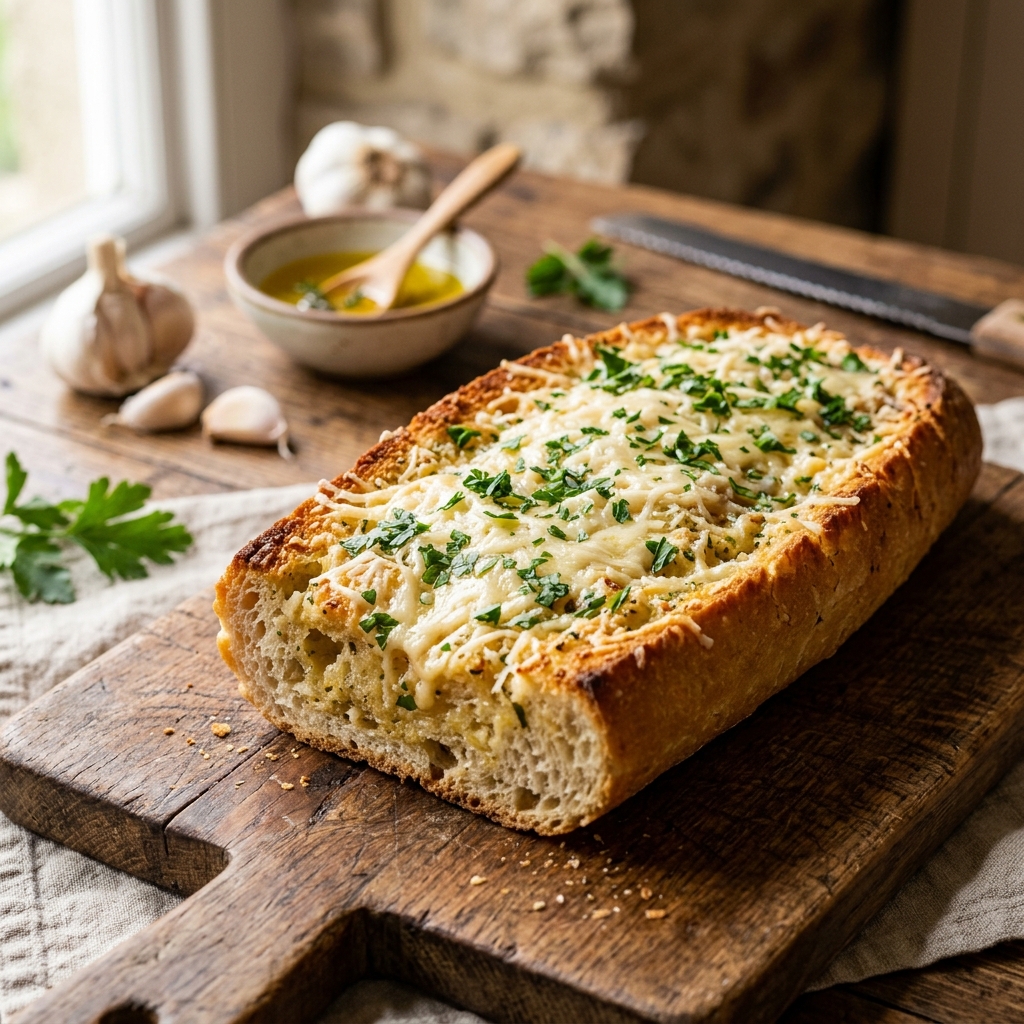
Parmesan and mozzarella options
Try one of these small changes to suit the meal and your pantry:
- Scatter grated Parmesan over the spread for a salty, lightly crisp top.
- Use finely shredded mozzarella for a softer, more pronounced cheese layer.
- Mix Parmesan with chopped parsley for a savory herb finish.
- Add fresh herbs such as parsley just before serving for a brighter aroma.
Cheese adds salt and richness, so taste the butter spread before seasoning it further. Parmesan in particular can make the finished bread taste saltier than the plain version. Mozzarella has a milder taste, which leaves more room for garlic and herbs.
Herb and Indian-inspired variations
Parsley is an easy herb to keep in the mix, but you can use another fresh herb that suits the rest of dinner. For an Indian-inspired variation, add chopped cilantro and chili to taste. The chili brings heat, so start with a little and adjust the next time if you want more.
These are optional flavor ideas, not extra steps you need for a good loaf. Pick one change at a time, especially when serving people with different spice preferences. Once the flavor is set, think about what the warm side will accompany.
How to Make Garlic Bread Without an Oven
A covered skillet can warm and toast buttered bread when an oven is unavailable. Cook the bread cut side down over low heat, cover the pan briefly, then check the underside before adjusting the heat. This stovetop garlic bread recipe without an oven relies on color and warmth, not a set minute count.
Spread garlic butter over the cut side, then place the bread buttered side down in a skillet. Keep the heat low so the butter can toast the surface without scorching it. Cover the pan briefly to help warm the center while the cut side browns.
Lift an edge and check the underside for color. If it is browning too quickly before the middle warms, lower the heat or move the pan off the burner for a moment. If the surface remains pale, continue cooking gently and check again.
Skillet size affects how much bread you can cook at once. Cut the loaf into shorter pieces if they do not fit, and work in batches rather than crowding the pan. Keep the lid nearby, but do not leave the skillet unattended while butter is heating.
There is no fixed skillet timing here, so use the appearance of the toasted surface and the warmth of the center as your cues. Once it is ready, slice or lift the pieces onto a plate and choose a meal that suits the buttery side.
What to Serve With Garlic Bread
Set the bread beside a bowl of soup for an easy pairing. Its warm, buttery slices are useful for soaking up sauce or adding a filling side to a lighter meal. Tomato soup, vegetable soup, or fish soup all work, especially when you want something to dip between spoonfuls.
Pasta with sauce is a natural partner because the bread catches the extra sauce on the plate. Serve it with lasagna, a tomato-based pasta, or another favorite from your recipe rotation. The soft center gives you something to pull apart, while the toasted surface adds a little crunch.
A fresh salad makes the loaf a welcome warm side for a lighter meal. It also fits beside pizza, steak, chicken, or pork. For a seafood dinner, serve it with fish soup or another saucy fish dish, where a slice can mop up the broth.
If you want a crisp snack alongside soup or dips, try these homemade gluten-free crackers as another option. Their crisp texture gives you a contrast to the soft middle of the bread. A small bowl of crackers can round out the table without taking the place of the warm loaf.
Make the quantity fit the meal: offer a few slices with soup, or set out more for a pasta dinner. If you are planning ahead, you can assemble the loaf or spread earlier and keep it ready for later.
Make-Ahead, Fridge, and Freezer Storage
Make the garlic butter ahead and refrigerate it for up to 5 days. Wrap assembled bread tightly before storing, and use the specific time limit for each form of the recipe. That way, you can choose a quick prep option or keep an unbaked loaf ready for a later meal.
Use plastic wrap for assembled bread going into the fridge, and foil for bread going into the freezer. Let frozen bread thaw overnight in the refrigerator if you want to bake it by the usual method. The options differ by whether the bread is assembled, baked, or still just a bowl of spread.
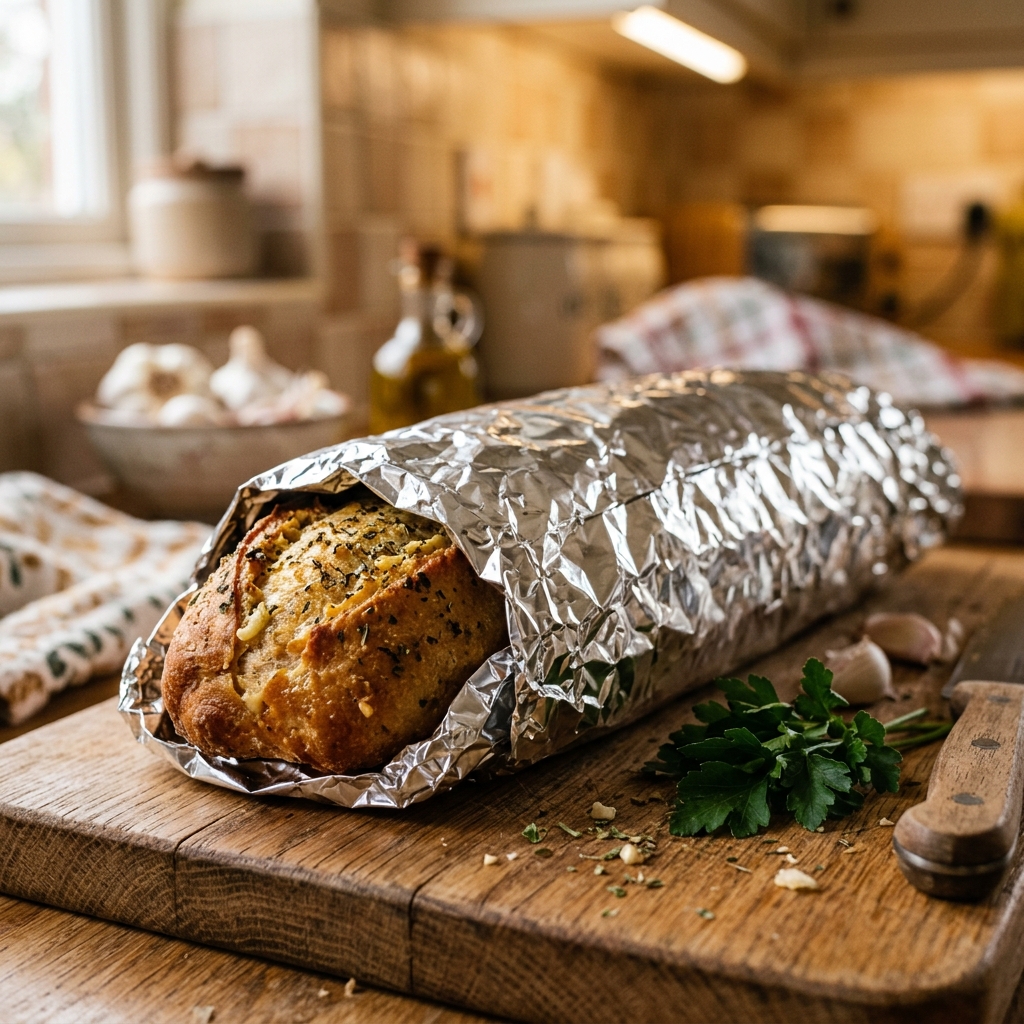
- Prepared garlic butter: Cover and refrigerate it for up to 5 days. Stir it again if the oil separates before use.
- Assembled unbaked bread: Wrap it in plastic and refrigerate for up to 2 days before baking. Fully assembled bread can instead be wrapped tightly in foil and refrigerated for up to 1 day.
- Frozen unbaked bread: Wrap the prepared bread in foil and freeze it for up to 4 months. Bake it from frozen, still wrapped, at 350°F for 28 to 32 minutes, or thaw overnight in the fridge and bake as directed.
- Baked leftovers: Wrap the bread and refrigerate it for 3 to 5 days. Reheat it wrapped in foil at 350°F for 10 to 15 minutes.
For crisp edges on reheated leftovers, open the foil for the last few minutes. Watch closely so the surface warms and toasts without drying out. If the middle is still cool, close the packet again and give it more time.
Labeling the foil with the date helps you keep track of what is in the fridge or freezer. Once you have planned how much to prepare, the nutrition estimate can help you understand what a typical serving contains.
Calories and Nutrition per Serving
One serving has an estimated 121 calories, based on the recipe’s stated yield of 16 servings. The estimate also lists 9 grams of fat, 8 grams of carbohydrates, and 1 gram of protein per serving. Treat those figures as a guide, since brands and preparation choices can change the numbers.
The estimated sodium is 161 milligrams per serving, and vitamin A is 205 IU. These are the listed nutrition details; no additional values are assumed. The amount of salt in your butter, the kind of bread you use, and optional toppings can all affect the finished loaf.
For a more precise count, use the nutrition information on the packages you bought and divide the full recipe by the number of portions you actually serve. A larger slice contains more of the loaf than a smaller one. Even slices make the per-serving estimate easier to compare.
These figures are estimates, not medical advice. They are not a substitute for guidance tailored to your health needs. If you track a particular nutrient, check the ingredient labels and account for the portion size you eat.
Once the numbers are clear, a couple of easy substitutions can help you adjust the garlic and salt without changing the basic idea.
Common Garlic Bread Questions and Quick Fixes
Garlic powder seasons with garlic, while garlic salt adds salt too. For this base recipe, replace the fresh garlic with 1 1/2 teaspoons of garlic powder. If you use garlic salt instead, reduce other salt or the spread can taste too salty.
Garlic powder and garlic salt are not interchangeable in flavor. Powder adds garlic without salt, so you can season the spread separately. Garlic salt brings both, changing the garlic intensity and the saltiness at once. Taste a small amount before spreading it across the loaf.
Lazy garlic bread is easy: spread garlic butter over ready-made bread or buns, then toast them until warm and browned. This works well with leftover rolls when you want a small side without preparing a full loaf. Keep an eye on smaller pieces because they can toast faster.
A garlic bread recipe suggested by an AI tool still needs a quick common-sense check. Make sure its ingredients match what you have, and confirm that its cooking method fits your equipment. If the recipe relies on an oven and you have only a skillet, the heat and doneness cues may need adjusting.
Choose the bread you have, season the spread to your liking, and make a loaf that suits the meal.
Conclusion
Make a loaf for the next dinner that needs a warm side. Fresh garlic butter is easy to tailor, and the baking style lets you choose between a more toasted surface and a softer loaf.
For a practical next step, pick up a French bread loaf and mix the spread before dinner. Decide how strong you want the garlic, then serve the bread while it is still warm.
FAQ
How do you make simple garlic bread?
What are the 3 ingredients needed to make garlic bread?
How do you make garlic loaf bread?
What makes garlic bread taste better?
Why is restaurant garlic bread so good?
Should I use garlic powder or salt in my garlic bread recipe?
How do restaurants make their garlic bread?
Related Recipe :
Garlic Bread Recipe Easy Homemade and Buttery Side Dish
The Ultimate Zucchini Bread (Moist, Tender, Never Dry!)
Overnight Oats Recipe: 7 No-Sugar Options That Still Taste Amazing
Garlic Butter Shrimp Recipe: 7 Best Ways to Make It Perfectly

Egg Fried Rice Recipes: 7 Best Ways to Make It Perfectly